Service overview
Basement Window Well Replacement
Window well replacement in Eagle Mountain, UT. Review corrosion, attachment, settled backfill, window clearance, and water movement around the foundation.
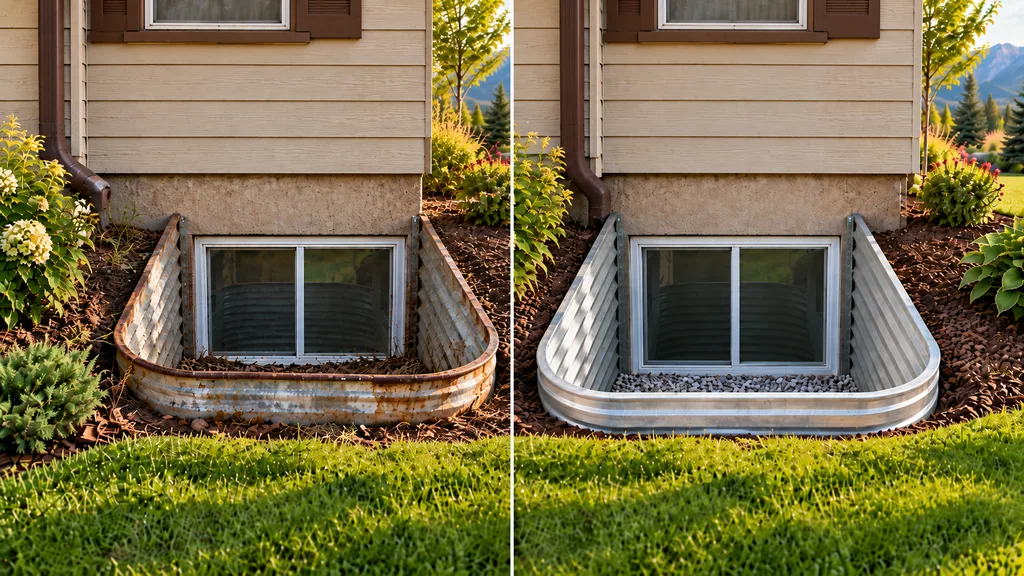
What to consider
Match the well to the opening and the ground.
Well condition and attachment points
Photograph rust, bowing, gaps, and soil entering behind the well; appearance alone does not establish the repair needed.
Window clearance and safe access
Compare the replacement with the actual window operation and planned room use, including any cover or climbing aid.
Soil, gravel, and edge conditions
Review settlement at the rim, sediment after snowmelt or irrigation, and the existing drainage path before backfilling.
At an Eagle Mountain home, a replacement well should be evaluated with the window and surrounding ground—not selected only by the old well’s shape. Document the opening, well depth, window operation, rim height, and planned room use. Note whether snowmelt, rainfall, or irrigation leaves water or sediment near the foundation.
Corrosion, bowing, broken attachments, or restricted window movement are reasons to have the well assessed. Surface discoloration alone does not establish the extent of damage, and the age of the home does not establish the well’s condition. Take photos from a safe position and ask a qualified contractor whether repair or replacement is appropriate.
A gap at the foundation or new soil deposits inside the well can point to movement or erosion that deserves review. Look beyond the attachment to the grade at the rim, downspout outlets, and irrigation nearby. Replacing the shell without addressing those conditions may leave the source of water or sediment unchanged.
A basement bedroom plan may change the clearance needed around an existing window. Compare the open window, well, cover, and route to ground level with the requirements confirmed for the room. Ask Eagle Mountain City about the proposed alteration rather than assuming every existing well is too small—or that a larger well alone makes the room acceptable.
The provider should explain excavation access, removal, foundation preparation, the selected material, attachment details, and backfill. Those details depend on the actual wall and product, not a universal installation sequence. Discuss how fences, paths, patios, planting areas, and utilities beside the well will be protected or restored.
When the ground is disturbed, review how the finished rim and grade will manage surface water. Eagle Mountain’s rainfall and snowmelt context makes the destination of collected water important, but a gravel base, dry well, or connection to existing drainage should not be assumed suitable. Ask what the soil and available outlet support and what maintenance the proposal requires.
A cover can help limit some debris and direct precipitation, but it is not a repair for a damaged well or an unsuitable drainage path. Review the product’s fit and stated limitations, and confirm that a cover over an escape opening does not obstruct the route from inside. Do not assume every cover is a fall-protection device or suitable for the same snow conditions.
Coordinate the well with basement window installation if the opening or room use is changing. If the main concern is seasonal pooling, a window well drainage evaluation may be needed even when the existing well can remain. The scope should distinguish material damage, clearance, and water management.
For an Eagle Mountain estimate, share photos of the well and nearby grade, the window’s approximate dimensions, and the timing of any water issue. Ask who will confirm local requirements, how the new well will fit the opening, and what restoration is included. This guide does not promise that replacement alone will prevent water intrusion or certify an escape route.
Other Basement Egress & Access Services
Compare related work before choosing a scope: a new opening, a replacement well, and a drainage concern may need different evaluations.
Basement Walkout Entrance Installation
Compare entrance locations against the basement floor, lot grade, and available stairwell space.
Basement Window Installation
Review daylight, room use, window operation, and the complete route through the exterior well.
Window Well Drainage
Identify the water source and a suitable discharge path before selecting a drain or other improvement.
Questions homeowners ask
Before replacing a window well.
When should a window well be replaced?
Have corrosion, bowing, attachment gaps, or restricted window operation assessed. At an Eagle Mountain property, also note sediment or pooling after snowmelt, rain, or irrigation. Those observations help distinguish a damaged well from a grading or drainage issue that replacement alone would not address.
Can a new well use the existing window?
Possibly. Check the actual opening, window operation, intended room use, and route to ground level first. A larger well may be part of a bedroom project, but replacing the well does not by itself establish that the window meets applicable requirements.
What happens to the soil around the well?
The excavation and backfill plan should suit the soil encountered on your lot. Eagle Mountain’s location does not establish one soil condition for every property. Review settlement near the foundation, the rim height, surface runoff, and any drainage connection with the contractor.
Talk through your situation
Not sure which service fits?
That is a common starting point. Describe what you see and select “Not Sure / Need Advice.”
Share project details